
Influencer marketing for e-commerce is the practice of partnering with social media creators who authentically promote your products to engaged audiences, generating measurable sales and brand lift beyond traditional advertising. The industry benchmark sits at $5.78 earned per $1 spent, and top-quartile programs exceed $20 per $1. This guide covers creator tiers, vetting methods, performance contracts, content management, and attribution techniques that e-commerce brands need to build a profitable influencer program in 2026. Tools like TikTok Shop, Shopify Collabs, and AI-powered creator discovery platforms are now central to how leading brands run these programs.
What are the influencer tiers in an e-commerce guide?
Successful e-commerce programs segment creators by conversion behavior, not just follower count. Each tier serves a different campaign goal, and mixing them up wastes budget.
- Micro-creators (10,000–100,000 followers): These creators deliver the highest engagement rates and the strongest affiliate conversion results. Their audiences are tight-knit and trust their recommendations. Use them for affiliate-driven campaigns and product launches targeting niche buyers.
- Mid-tier influencers (100,000–500,000 followers): This tier balances reach and engagement. They work well for brand awareness campaigns and TikTok Shop amplification. They are cost-effective for brands that need scale without macro-level fees.
- Macro-influencers (500,000+ followers): Best reserved for major product launches or seasonal campaigns. Cap macro-influencer spend at 15% of your total influencer budget. Their reach is broad, but conversion rates per follower are lower than micro-creators.
59% of marketers now use AI for influencer discovery, vetting, and performance tracking. That adoption rate reflects how manual creator research has become too slow and too unreliable for competitive e-commerce programs.
Pro Tip: Build your program with a portfolio of 10–15 micro-creators before adding any macro-influencers. The data you collect on conversion rates and audience fit will make your macro-level spend far more targeted.

How to select and vet the right influencers for maximum ROI
Creator-product fit drives campaign success more than follower count or visual aesthetics. Credibility drives purchase intention more than physical attractiveness, and category expertise is the critical variable for e-commerce sales. A fitness creator promoting supplements converts far better than a lifestyle creator with twice the following.
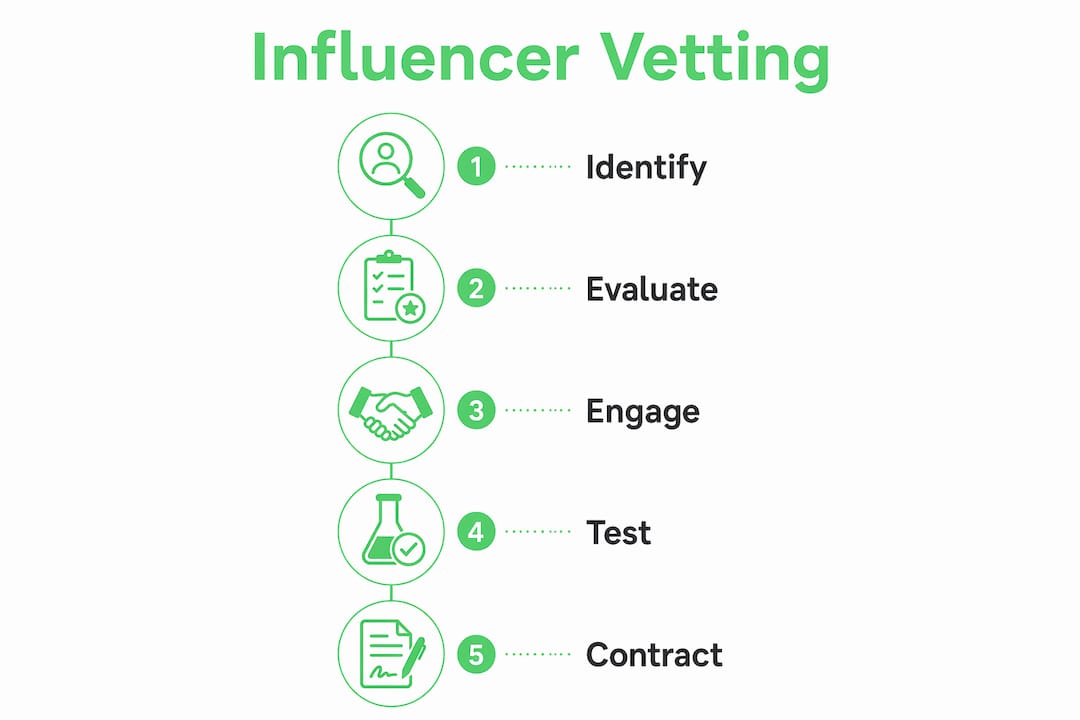
Follow this vetting process before signing any creator:
- Define your category requirements. List the specific niche your product belongs to. A skincare brand needs creators with demonstrated skincare expertise, not just beauty content in general.
- Use a discovery tool. Platforms like Modash, HypeAuditor, and UpPromote provide audience demographic data, engagement rate analysis, and past performance metrics. These tools replace manual spreadsheet research.
- Check engagement quality. Look beyond the engagement rate percentage. Read comments. Genuine questions, product-specific responses, and repeat commenters signal a real, invested audience.
- Review past affiliate performance. Ask for data on previous brand partnerships. A creator who has driven consistent affiliate sales in your category is a proven asset. One who has not is an unknown risk.
- Audit audience demographics. Confirm the creator’s audience matches your customer profile. Age, location, and income level matter. A creator with 80% of their audience outside your shipping region is a poor fit regardless of other metrics.
- Flag authenticity red flags. Sudden follower spikes, low comment-to-like ratios, and generic comments are signs of purchased engagement. Any one of these disqualifies a creator from your program.
Creators act as persuasion anchors, where trust and credibility primarily drive purchase intent. This means a creator who genuinely uses and understands your product will always outperform one who simply has a large audience.
Pro Tip: Ask shortlisted creators to record a 60-second unscripted video about your product before signing a contract. Their natural language, product knowledge, and enthusiasm reveal more than any media kit.
How to build performance-based influencer partnerships
Influencer marketing has evolved from a brand awareness tactic into a measurable, revenue-driven performance channel. Your contracts need to reflect that shift.
The most effective compensation structure combines a modest base fee with performance-based commissions. Hybrid contracts improve ROAS by 41% over fixed-fee models. That improvement comes from aligning creator incentives with your sales goals.
Key elements of a performance-based contract:
- Tiered commission rates: A common structure pays 8% on the first $5,000 in sales and 12% above that threshold. This rewards creators who consistently drive volume.
- Base fee for mid-tier creators: A modest base fee reduces creator risk and secures commitment. It also ensures content quality, since creators are not solely dependent on conversion outcomes.
- Clear deliverables: Specify post frequency, content formats, and posting windows in the contract. Vague agreements produce inconsistent output.
- Usage rights: Secure the right to repurpose creator content in paid ads, email campaigns, and product pages. This extends the value of every piece of content produced.
| Compensation model | Best for | ROAS outcome |
|---|---|---|
| Fixed fee only | Brand awareness campaigns | Lower, harder to measure |
| Affiliate commission only | Micro-creator programs | Variable, high upside |
| Hybrid (base + commission) | Mid-tier and macro creators | 41% improvement over fixed fee |
Performance-based contracts aligned with TikTok Shop and Instagram Affiliate deliver more predictable ROI. Shopify Collabs adds closed-loop tracking that connects creator activity directly to store revenue.
Best practices for managing influencer content and brand alignment
Authentic content outperforms scripted content in every measurable category. Co-creating content with creators through storytelling and lifestyle integration maximizes both trust and conversion rates. The brand provides direction; the creator provides voice.
Effective content management follows these practices:
- Write a creative brief, not a script. Give creators your key product claims, brand guidelines, and any mandatory disclosures. Let them decide how to present the information. Their natural delivery is what their audience trusts.
- Prioritize demos and lifestyle content. Product demonstrations and real-use scenarios convert better than static promotional posts. A creator showing how a product fits into their daily routine is more persuasive than a product photo with a caption.
- Use shoppable content features. TikTok Shop product links, Instagram Shopping tags, and Shopify Collabs storefronts reduce friction between discovery and purchase. Every extra step a buyer has to take to check out reduces conversion.
- Build a UGC loop. Encourage creators to repost customer responses and reviews. User-generated content from buyers validates the creator’s recommendation and extends campaign reach organically.
- Confirm FTC compliance. All sponsored content must include clear disclosure language. In the United States, the Federal Trade Commission requires explicit disclosure of paid partnerships. Non-compliance creates legal and reputational risk.
Shoppable posts, live shopping streams, and UGC loops aligned with influencer storytelling significantly enhance conversion rates. Live shopping in particular compresses the sales cycle by combining entertainment, social proof, and a direct purchase path in one session.
How do you measure influencer ROI beyond promo codes?
Promo codes alone undercount influenced revenue by 20–35% due to indirect customer paths. A buyer who sees a creator’s post, searches your brand name, and purchases directly is not captured by a promo code. That gap distorts your budget decisions.
Hybrid attribution combines three data sources to produce an accurate picture:
- UTM parameters on all creator links track direct click-through traffic in Google Analytics or your e-commerce platform.
- Post-purchase surveys ask customers how they discovered your brand. This captures the indirect paths that promo codes miss.
- Branded search lift measures the increase in Google searches for your brand name during and for 30 days after a campaign. A significant lift confirms that creator content is building awareness even when it does not produce an immediate click.
| Attribution method | What it captures | Limitation |
|---|---|---|
| Promo codes | Direct discount-driven purchases | Misses 20–35% of influenced revenue |
| UTM links | Click-through traffic by creator | Does not capture offline or search paths |
| Post-purchase surveys | Self-reported discovery channel | Relies on customer recall accuracy |
| Hybrid (all three combined) | Full-funnel influencer impact | Requires setup across multiple tools |
Top e-commerce brands treat influencer marketing as a measurable performance channel integrated into their full media mix. Platforms like TikTok Shop and Shopify Collabs provide closed-loop tracking that connects creator content directly to completed purchases.
Pro Tip: Run a 30-day branded search analysis after every campaign using Google Search Console. Compare search volume for your brand name in the 30 days before and after the campaign. This single metric often reveals the true reach of a creator partnership.
Key Takeaways
A profitable influencer marketing program for e-commerce requires creator-product fit, performance-based contracts, and hybrid attribution to measure true revenue impact.
| Point | Details |
|---|---|
| ROI benchmark | Industry average is $5.78 per $1 spent; programs below $3 indicate poor creator fit. |
| Creator tier selection | Match micro, mid-tier, and macro creators to specific campaign goals, not just budget. |
| Vetting over reach | Use tools like Modash and HypeAuditor to verify engagement quality and audience demographics. |
| Hybrid contracts | Combining base fees with tiered commissions improves ROAS by 41% over fixed-fee models. |
| Attribution accuracy | Promo codes alone miss 20–35% of influenced revenue; use UTM links and post-purchase surveys together. |
What I have learned after years of watching influencer programs succeed and fail
The most common mistake e-commerce brands make is treating influencer marketing as a reach game. They chase follower counts, sign macro-influencers on fixed fees, and then wonder why their return on investment is poor. The data is clear: category expertise drives purchase intent, not audience size.
The second mistake is measurement laziness. Brands set up a promo code, call it tracking, and then make budget decisions based on incomplete data. A creator who drives $30,000 in branded search revenue and $8,000 in direct promo code sales looks like an $8,000 performer on a promo-only dashboard. That creator gets cut. The brand loses a high-value partner and never knows why results declined.
The third mistake is writing scripts instead of briefs. Creators who have built trust with their audiences have done so by speaking in their own voice. When a brand hands them a word-for-word script, the audience notices. Engagement drops, and so do conversions. The data-driven approach to digital marketing applies here too: test content formats, measure what works, and give creators the freedom to execute within a clear framework.
The brands that win in influencer marketing treat it as a performance channel from day one. They set clear goals, sign contracts with shared upside, use AI tools to find and monitor creators, and measure the full funnel. That discipline separates programs that scale from programs that stall.
— Steel
How Punchvirtualmanager helps e-commerce brands build influencer programs
E-commerce brands that want measurable results from influencer marketing need more than a list of creators. They need a structured program with the right tools, contracts, and attribution in place from the start.

Punchvirtualmanager is a Johannesburg-based digital marketing agency that builds data-driven influencer and social media marketing programs for e-commerce brands. The agency combines AI-powered creator discovery, performance tracking, and full-funnel attribution into tailored digital marketing packages designed for measurable growth. With a 99% advertising success rate and a track record of transparent client communication, Punchvirtualmanager gives brands the structure to scale influencer campaigns with confidence. Contact the team to discuss a customized influencer strategy for your store.
FAQ
What is influencer marketing in e-commerce?
Influencer marketing in e-commerce is the practice of partnering with social media creators to promote products to their engaged audiences, driving measurable sales and brand awareness. It functions as a performance channel when paired with proper tracking tools like TikTok Shop or Shopify Collabs.
What ROI should I expect from influencer marketing?
The industry benchmark is $5.78 earned per $1 spent, with top programs exceeding $20 per $1. Programs returning below $3 per $1 typically indicate poor creator-product fit.
Are micro-influencers better than macro-influencers for e-commerce?
Micro-creators (10,000–100,000 followers) generally deliver higher engagement rates and stronger affiliate conversion results than macro-influencers. Macro-influencers are better suited to major product launches where broad reach is the primary goal.
How do I track influencer campaign revenue accurately?
Promo codes alone undercount influenced revenue by 20–35%. Combine UTM parameters, post-purchase surveys, and branded search lift analysis to capture the full impact of a campaign.
What is a hybrid influencer contract?
A hybrid contract combines a modest base fee with tiered performance commissions, such as 8% on the first $5,000 in sales and 12% above that. This structure improves ROAS by 41% compared to fixed-fee agreements.