
A tagline is defined as a short, memorable phrase that encapsulates a brand’s core promise and connects emotionally with its audience. The role of tagline in branding goes far beyond clever wordplay. Research from january 2026 confirms that taglines exert a significant positive influence on brand image, which in turn mediates purchase decisions. For businesses and marketers, understanding how taglines shape perception is not optional. It is the foundation of effective brand communication.
How taglines influence brand perception and consumer behavior
Taglines shape how consumers feel about a brand before they ever buy a product. A structural equation modeling study published in january 2026 found that taglines influence brand image with a path coefficient of β = 0.396, and brand image then drives purchase decisions at β = 0.472. That means taglines do not just decorate a brand. They actively move consumers toward buying.

Brand image functions as the bridge between a tagline and a purchase decision. When a tagline consistently reinforces a brand’s values, consumers build a mental picture of what that brand stands for. That mental picture is what they rely on when choosing between options at the point of sale.
Emotional resonance is the mechanism that makes taglines stick. Chief Marketing Officers at major brands confirm that campaign taglines paired with integrated assets like jingles create stronger purchase intent and heightened brand awareness. A tagline that triggers an emotion, whether confidence, nostalgia, or ambition, is far more likely to be recalled than one that simply describes a product feature.
“Tagline stickiness is grounded in emotional resonance rather than just catchy wording. It should reflect the brand’s core essence relevant to market context.”
Pro Tip: When crafting a tagline, test it for emotional response first. Ask a sample of your target customers how the phrase makes them feel, not just whether they understand it. Feeling precedes recall.
Memorability and emotional appeal work together. A tagline that consumers can repeat effortlessly becomes a free marketing asset. Every time a customer says it aloud, they reinforce the brand in their own mind and in the minds of those around them.
What is the difference between a tagline and a slogan?
Marketers frequently use “tagline” and “slogan” interchangeably, but the two serve distinct functions. Taglines represent core brand identity and seldom change, while slogans are campaign-specific and frequently updated. Confusing the two leads to inconsistent brand messaging and wasted creative effort.
A tagline belongs to the brand itself. It appears across all channels, all years, and all product lines. Nike’s “Just Do It” is a tagline. It applies to running shoes, gym gear, and sports apps alike. A slogan, by contrast, belongs to a specific campaign or product launch. It has a shorter lifespan and a narrower focus.
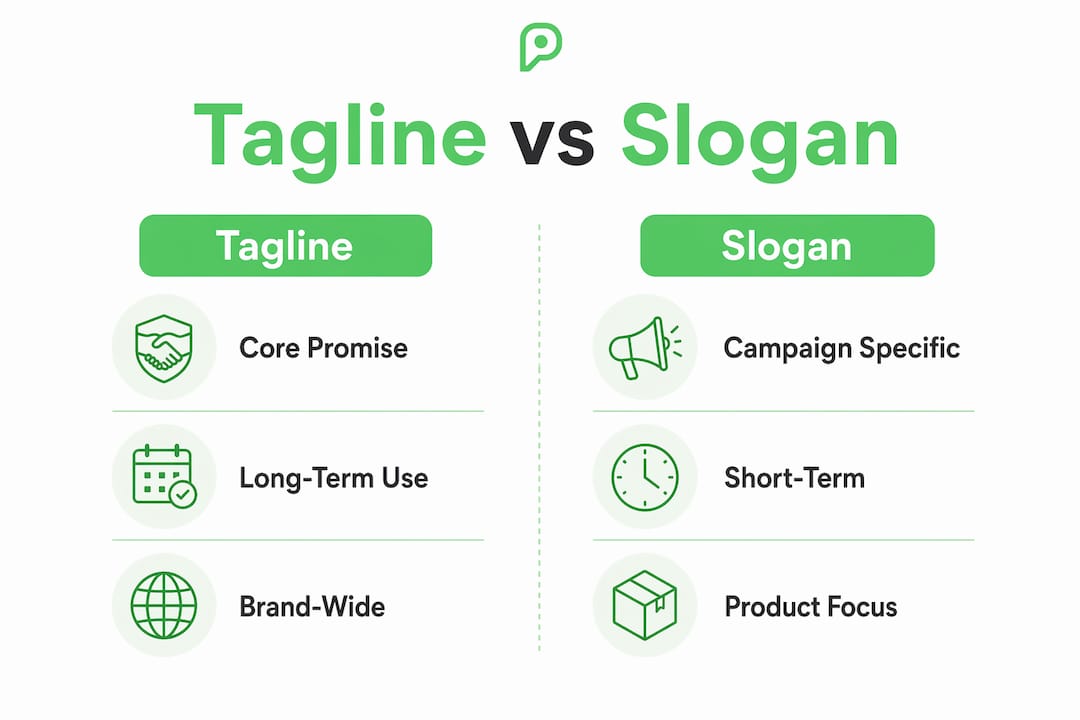
Catchphrases occupy a third category. They are often tied to a specific spokesperson, advertisement, or cultural moment. They can boost short-term awareness but rarely carry the long-term brand weight of a true tagline.
| Element | Purpose | Longevity | Scope | Example |
|---|---|---|---|---|
| Tagline | Represents core brand identity | Long-term, rarely changes | Entire brand | “Just Do It” (Nike) |
| Slogan | Supports a specific campaign or product | Short-term, frequently updated | Campaign or product line | “I’m Lovin’ It” as a campaign push |
| Catchphrase | Creates cultural or spokesperson association | Tied to moment or person | Single ad or personality | “Where’s the beef?” (Wendy’s, 1984) |
Knowing which tool to use at which moment is a practical skill. A brand building long-term equity needs a strong tagline. A brand launching a seasonal promotion needs a slogan. Using a tagline where a slogan belongs, or vice versa, dilutes both.
How to create an effective brand tagline
Creating a tagline that works requires more than creativity. It requires a clear process. Effective taglines are clear, brief, unique, and emotionally resonant, which enhances memorability and builds brand trust over time.
Follow these steps to develop a tagline with real impact:
- Define your brand’s core promise. Identify the single most important thing your brand delivers. If you cannot state it in one sentence, your tagline will not be able to either.
- Study your audience’s language. Use the words your customers actually say, not marketing language. Taglines written in the customer’s voice feel natural and trustworthy.
- Apply the rule of three. Research shows that three-word phrases are easier to recall and resonate emotionally. Nike’s “Just Do It” and McDonald’s “I’m Lovin’ It” both follow this pattern.
- Build in a double meaning where possible. The strongest taglines carry a surface meaning and a deeper brand story. This layering rewards consumers who engage with the brand repeatedly.
- Test for memorability. Share your top candidates with a small group. Ask them to repeat the tagline 24 hours later without prompting. The one they remember is the one that works.
- Align with your SEO strategy. A tagline that includes a naturally searchable phrase can reinforce your digital marketing strategy without sacrificing creativity. Avoid forcing keywords. If the phrase feels awkward, it will not stick.
Pro Tip: Run your top three tagline candidates through a simple survey tool. Ask respondents to rate each on clarity, emotional appeal, and brand fit. Score the results numerically. The data removes guesswork from a decision that often gets made on gut feeling alone.
Alignment with brand values is non-negotiable. A tagline that sounds good but contradicts what the brand actually delivers creates cognitive dissonance. Consumers notice the gap, and trust erodes quickly.
Best practices for integrating taglines across branding channels
Consistent tagline placement across every brand touchpoint multiplies its impact. Including taglines in logos or marketing materials clarifies brand identity and adds personality when aligned with brand goals. A tagline that appears only on a website but not in ads, social posts, or packaging loses most of its reinforcing power.
Key integration practices include:
- Logo placement. Position the tagline directly beneath the brand name in the logo lockup. This pairing trains consumers to associate the phrase with the visual identity automatically.
- Social media consistency. Use the tagline in profile bios, pinned posts, and campaign hashtags. Consistent tagline usage across social media channels reinforces brand voice without requiring additional creative spend.
- Advertising copy. End every ad, whether digital or print, with the tagline. Repetition across formats builds recall faster than any single high-budget placement.
- Email signatures and packaging. These low-cost touchpoints reach existing customers repeatedly. A tagline in an email signature appears dozens of times per year per contact.
- Seasonal adaptation. Some brands adjust their tagline slightly for seasonal campaigns while keeping the core phrase intact. This keeps messaging fresh without abandoning the equity built in the original.
Tagline overuse is a real risk. Placing the tagline in every sentence of body copy dilutes its impact. The tagline should appear at key moments, not as a filler phrase. Misalignment is equally damaging. A tagline that promises premium quality on a brand known for budget pricing creates confusion, not confidence.
Omnichannel branding requires that the tagline carry the same meaning whether a consumer encounters it on a billboard, a mobile ad, or a product label. Consistency across channels is what converts a phrase into a brand asset.
Key Takeaways
A tagline is the single most compact expression of a brand’s promise, and its consistent, emotionally resonant use across all channels directly shapes brand image and drives purchase decisions.
| Point | Details |
|---|---|
| Taglines drive purchase decisions | Research shows taglines influence brand image (β = 0.396), which then drives buying behavior (β = 0.472). |
| Emotional resonance matters most | Taglines that trigger an emotion outperform descriptive phrases in both recall and consumer trust. |
| Taglines differ from slogans | Taglines represent the whole brand long-term; slogans support specific campaigns and change frequently. |
| The rule of three works | Three-word taglines like “Just Do It” are easier to recall and carry stronger emotional weight. |
| Consistency multiplies impact | Placing the tagline across logos, ads, social media, and packaging builds recognition faster than any single channel alone. |
Why taglines still matter more than most marketers admit
Some marketing professionals treat taglines as a legacy tool, something brands did before digital channels made real-time engagement possible. That view misreads how consumer memory actually works.
I have watched brands invest heavily in content calendars, paid media, and influencer partnerships, only to struggle with brand recall six months later. The brands that hold attention over time almost always have one thing in common: a tagline that consumers can repeat without prompting. That repeatability is not accidental. It is the result of deliberate, consistent messaging.
The argument that taglines are less relevant in 2026 ignores a basic fact. Digital noise has increased, not decreased, the need for a clear, memorable brand statement. When a consumer sees hundreds of brand messages per day, the brand that cuts through is the one with a phrase that lodges in memory. Chief Marketing Officers acknowledge that taglines express brand spirit quickly and effectively, even as marketing tools evolve.
The practical lesson is this: innovation in channels does not replace the need for a strong brand message. A tagline is not a relic. It is the shortest possible version of your brand’s story, and in a crowded market, brevity wins.
— Steel
Punchvirtualmanager helps you build a brand that gets remembered
Brand messaging requires more than a good idea. It requires a strategy that connects your tagline to every channel your customers use. Punchvirtualmanager works with businesses across South Africa to develop brand communication that is clear, consistent, and built to perform.

The agency’s digital marketing services cover everything from brand messaging and tagline strategy to paid advertising and social media management. Punchvirtualmanager’s marketing packages are structured to give businesses of all sizes access to professional brand development without the overhead of a full in-house team. With a 99% advertising success rate and a track record of measurable client results, Punchvirtualmanager delivers the kind of brand clarity that turns a phrase into a competitive advantage.
FAQ
What is the role of a tagline in branding?
A tagline defines a brand’s core promise in a short, memorable phrase that builds recognition and shapes consumer perception across all marketing channels. Research confirms it directly influences brand image and purchase decisions.
How is a tagline different from a slogan?
A tagline represents the entire brand and rarely changes, while a slogan supports a specific campaign or product and is updated frequently. Using them interchangeably weakens both.
How long should an effective tagline be?
The most recalled taglines follow the rule of three, using three concise words that are easy to repeat and emotionally resonant. Longer phrases are harder to remember and less likely to stick.
Where should a tagline appear in marketing materials?
A tagline should appear in the logo lockup, advertising copy, social media profiles, email signatures, and product packaging. Consistent placement across all touchpoints builds recall faster than any single channel.
Can a tagline improve purchase intent?
Yes. Structural equation modeling research from january 2026 found that taglines positively influence brand image, which then drives purchase decisions with a path coefficient of β = 0.472.